What Is ROS
July 28, 2025
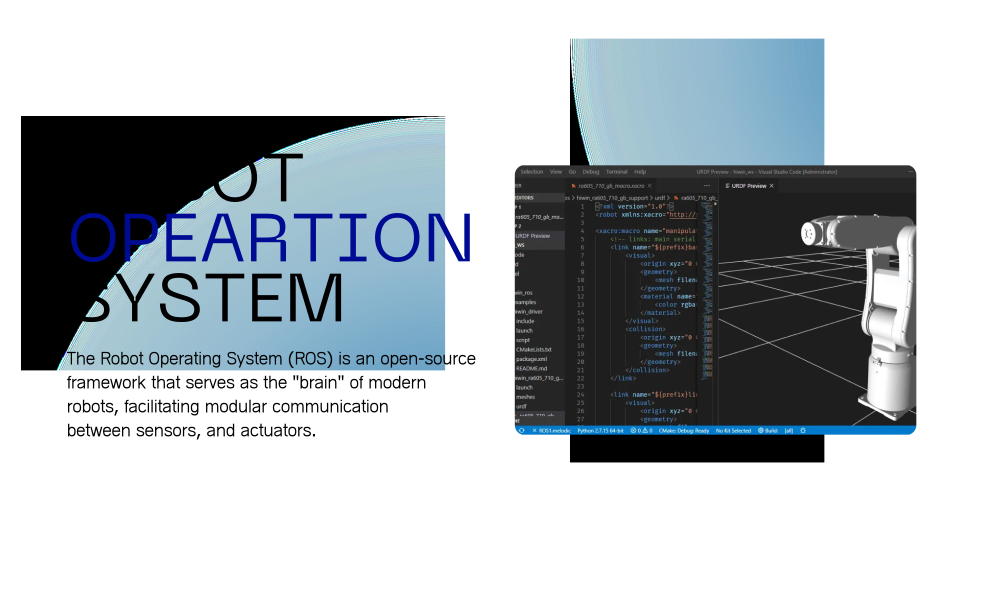
When we think of a robot, we probably imagine a sophisticated machine with a metal body and precise movements. But beneath all that, a robot wouldn't be able to function without its "brain" — the software that manages all functions, from movement and vision to decision-making. This is where ROS, or Robot Operating System, plays a crucial role.
ROS is not an operating system like Windows or Linux, but rather a collection of libraries and tools that facilitate the development of robotics software. It provides a "framework" so that the various components of a robot can connect and communicate efficiently.
Imagine a robot with a camera, motors, proximity sensors, and a navigation system. Without ROS, each of these components would have to be programmed and connected individually with complex code. With ROS, each part becomes a "node" — a kind of standalone module — that can exchange information through a messaging system. The camera can send images to the object recognition system, which then tells the motors which direction to move.
Because ROS is open-source, a worldwide community contributes to developing and enriching its ecosystem. This allows developers from beginners to professional researchers to build robots from scratch or modify existing projects more easily.