What Is Solar PV
July 21, 2025
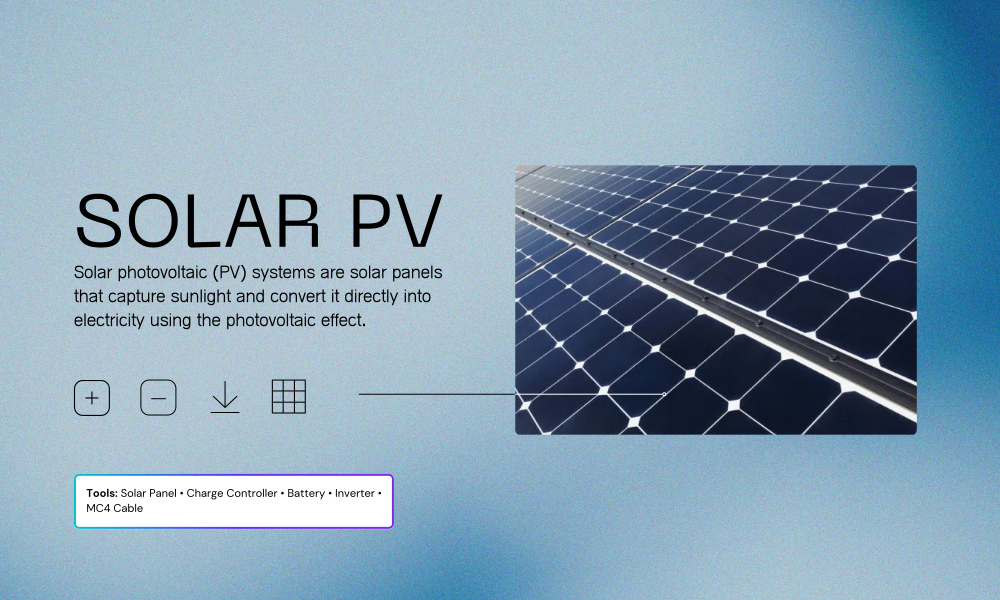
Imagine a dark-colored panel mounted on a roof or floating on the surface of water, stationary but working non-stop when the sun shines. That panel is part of a system called Solar PV, short for Photovoltaic, a technology that allows us to convert sunlight directly into electrical energy.
In principle, Solar PV works by utilizing the photovoltaic effect. When sunlight shines on the surface of a panel made of a semiconductor material such as silicon, the photons in the light strike atoms in the material, freeing electrons. This movement of electrons creates direct current (DC). This current can then be channeled to an inverter to be converted into alternating current (AC), the form of energy commonly used in homes.
While it may sound complex, this system is actually quite simple in operation: there are no moving parts, it produces no noise, and it doesn't pollute the environment. This technology is now used on various scales, from households to large-scale power plants. With increasingly affordable installation costs and continually improving technology, Solar PV is becoming the backbone of the transition to clean energy.